Tag: Digital Transformation

  • Cloud Computing Explained: Benefits for Businesses

    Cloud Computing Explained: Benefits for Businesses

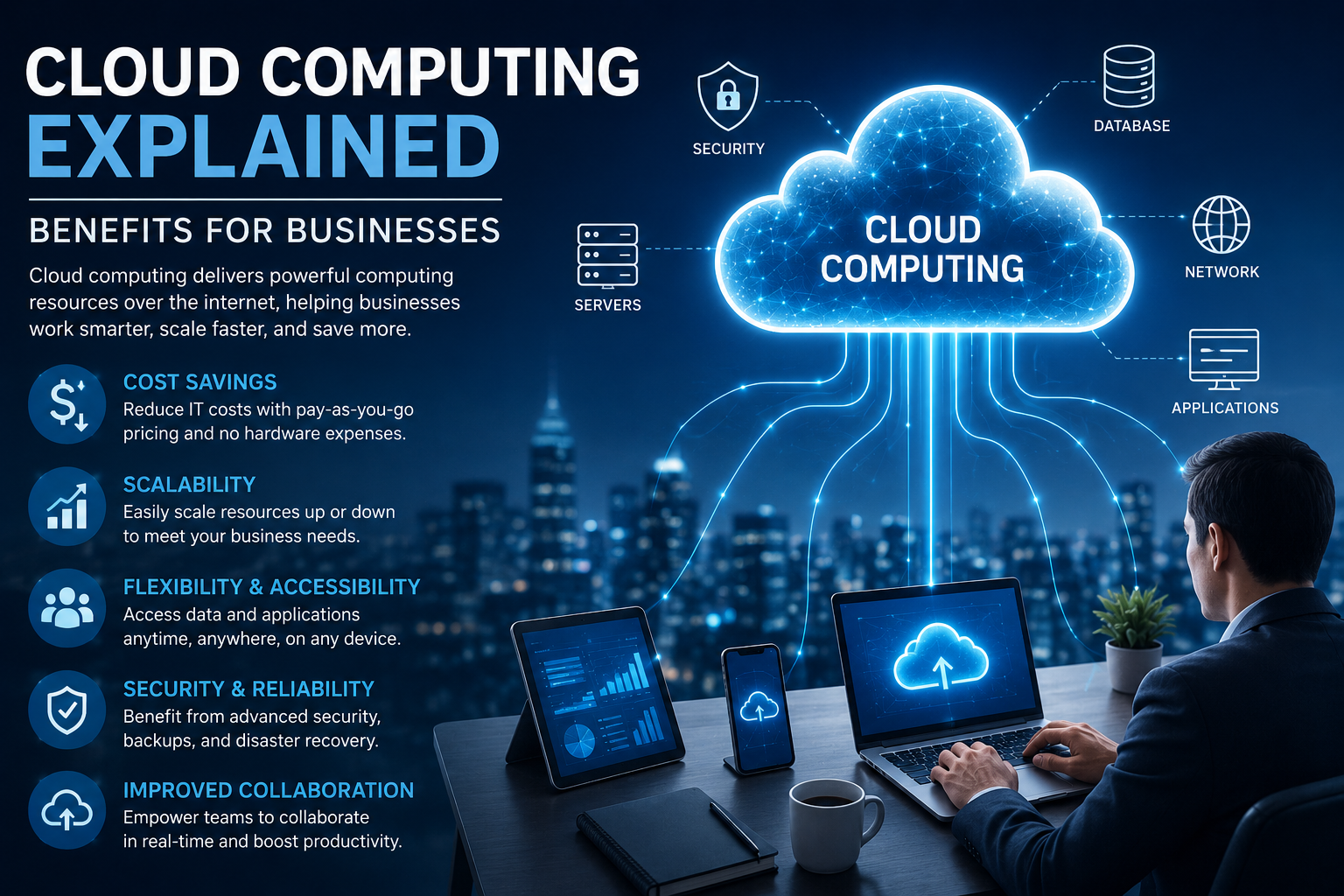
    Technology continues to transform the business world, and cloud computing has become one of the most important innovations of the digital age. Cloud computing refers to the delivery of computing services such as storage, databases, software, and networking over the internet. Instead of relying on physical servers and expensive hardware, businesses can access resources on demand from cloud service providers.

    One of the greatest benefits of cloud computing is cost efficiency. Traditional IT infrastructure requires significant investments in equipment, maintenance, and upgrades. Cloud solutions eliminate many of these expenses by offering flexible pricing models where businesses only pay for the resources they use.

    Another major advantage is scalability. As a business grows, its technology needs increase. Cloud computing allows organizations to quickly scale resources up or down without purchasing additional hardware. This flexibility helps companies adapt to changing market demands and business requirements.

    Cloud computing also supports remote work and collaboration. Employees can access files, applications, and business systems from virtually anywhere with an internet connection. Teams can collaborate in real time, improving communication and productivity across departments.

    Data security and disaster recovery are additional benefits. Most cloud providers implement advanced security measures, including encryption, regular backups, and threat monitoring. These features help protect sensitive business information and ensure business continuity in the event of unexpected disruptions.

    As digital transformation continues to accelerate, cloud computing remains a powerful tool for innovation and growth. Businesses that embrace cloud technology can improve efficiency, reduce operational costs, and gain a competitive advantage in today’s fast-paced marketplace.
  • The Future of Artificial Intelligence: What to Expect in the Next 5 Years

    The Future of Artificial Intelligence: What to Expect in the Next 5 Years

    Artificial Intelligence (AI) is rapidly transforming the way people live, work, and interact with technology. What once seemed like science fiction is now a part of everyday life, from virtual assistants and personalized recommendations to smart automation and advanced data analysis. Over the next five years, AI is expected to become even more powerful, influencing nearly every industry.

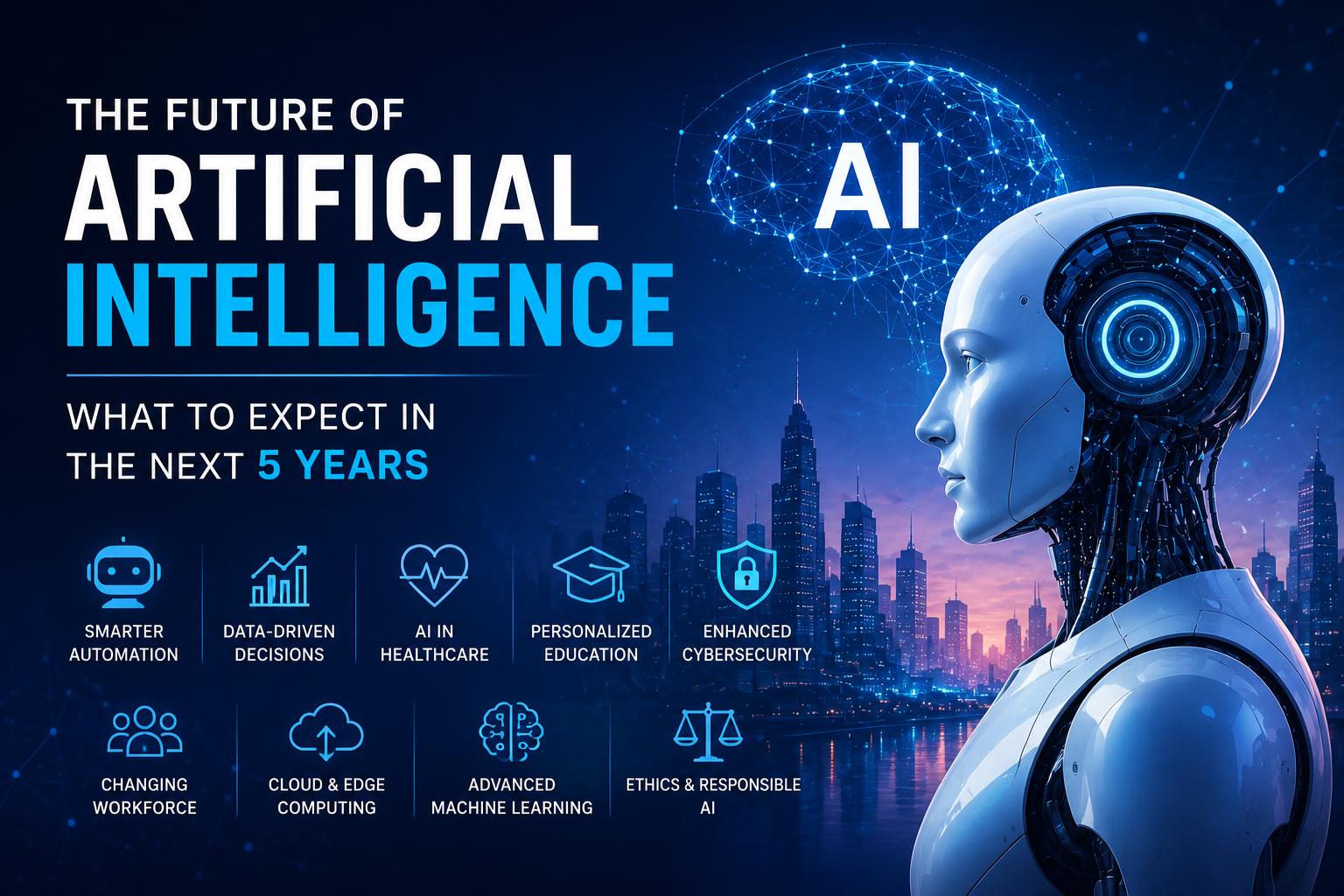
    One of the biggest developments will be smarter automation. Businesses will use AI to handle repetitive tasks, improve customer support, and analyze large amounts of data in seconds. This will increase productivity, reduce operational costs, and allow employees to focus on creative and strategic work.

    The healthcare industry will continue to benefit from AI through faster disease detection, personalized treatment plans, and improved patient care. In education, AI-powered learning platforms will provide personalized lessons that match each student’s pace and learning style.

    Cybersecurity will also evolve as AI helps organizations detect threats, prevent cyberattacks, and respond to security risks more efficiently. At the same time, ethical concerns such as data privacy, transparency, and responsible AI development will become increasingly important.

    While AI will create new opportunities, it will also reshape the job market. Some routine jobs may become automated, but new careers in AI development, cybersecurity, data science, and machine learning will continue to grow.

    The future of AI is not about replacing humans but empowering them with smarter tools. Businesses and individuals who embrace AI responsibly will be better prepared for the digital future and the opportunities it brings.