Tag: Technology

  • The Rise of Smart Homes and IoT Devices

    The Rise of Smart Homes and IoT Devices

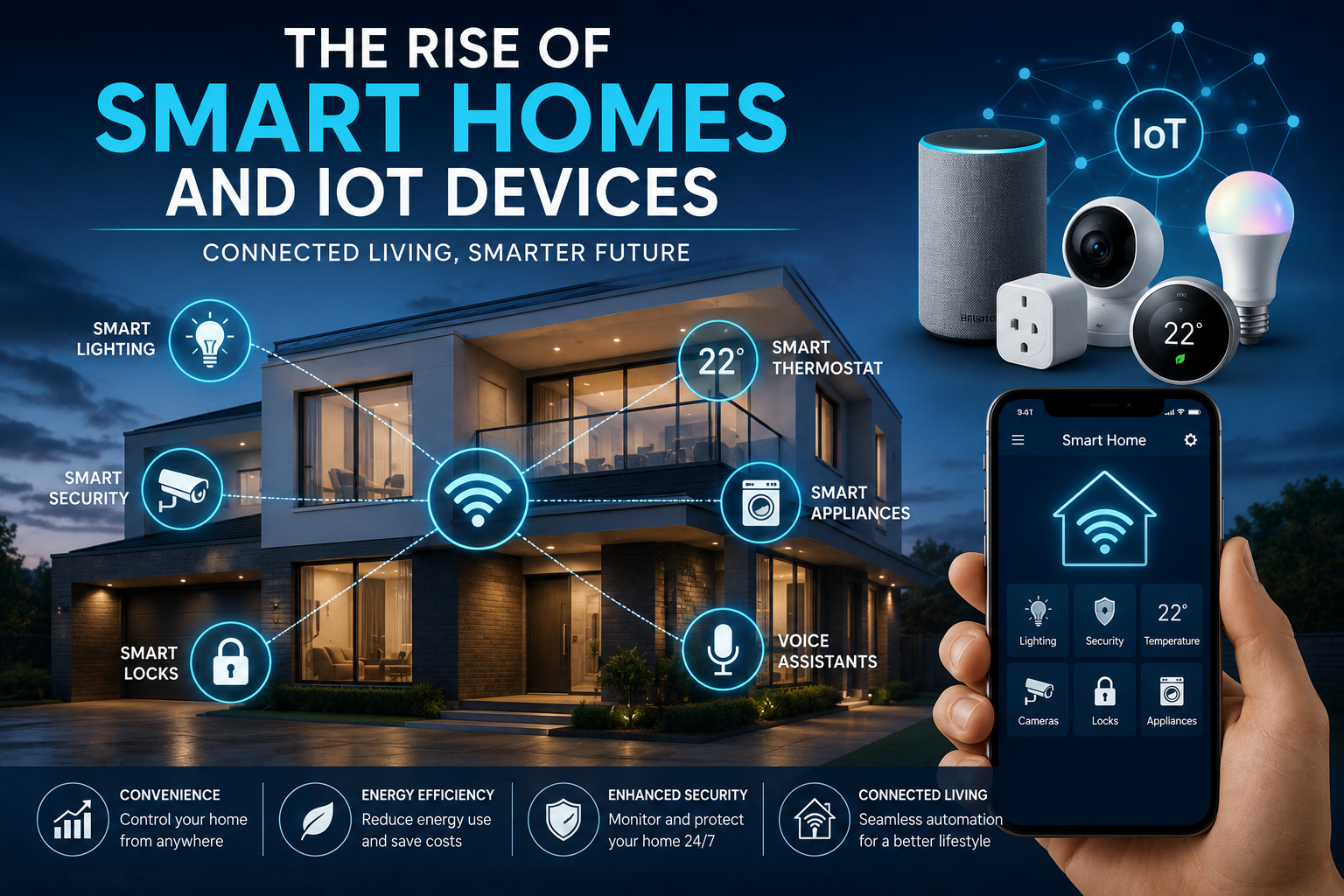
    Technology is transforming the way people live, and one of the most exciting developments is the growth of smart homes and Internet of Things (IoT) devices. IoT refers to a network of connected devices that communicate with each other through the internet, making everyday tasks more convenient, efficient, and secure.

    Smart homes use IoT technology to automate and control household systems such as lighting, security, heating, appliances, and entertainment devices. With a smartphone or voice assistant, homeowners can manage these systems from anywhere in the world. This level of connectivity provides greater comfort and control over daily activities.

    One of the biggest benefits of smart home technology is energy efficiency. Smart thermostats, lighting systems, and power management tools help reduce energy consumption by automatically adjusting settings based on usage patterns. This can lower utility bills while supporting environmental sustainability.

    Security is another major advantage. Smart cameras, motion sensors, video doorbells, and smart locks allow homeowners to monitor their properties in real time. Instant notifications and remote access features help improve safety and provide peace of mind.

    The healthcare sector is also benefiting from IoT innovations. Smart wearable devices can track health metrics such as heart rate, sleep quality, and physical activity, helping individuals maintain healthier lifestyles and enabling healthcare providers to monitor patients remotely.

    As technology continues to advance, smart homes and IoT devices are expected to become even more integrated into everyday life. These innovations are creating smarter, safer, and more efficient living environments while shaping the future of connected technology.
  • Cybersecurity Tips Everyone Should Follow in 2026

    Cybersecurity Tips Everyone Should Follow in 2026

    As technology continues to advance, cyber threats are becoming more sophisticated and widespread. From personal data theft to business security breaches, cybercriminals are constantly looking for new ways to exploit vulnerabilities. In 2026, cybersecurity is no longer just an IT concern—it’s a responsibility for everyone who uses digital devices and online services.

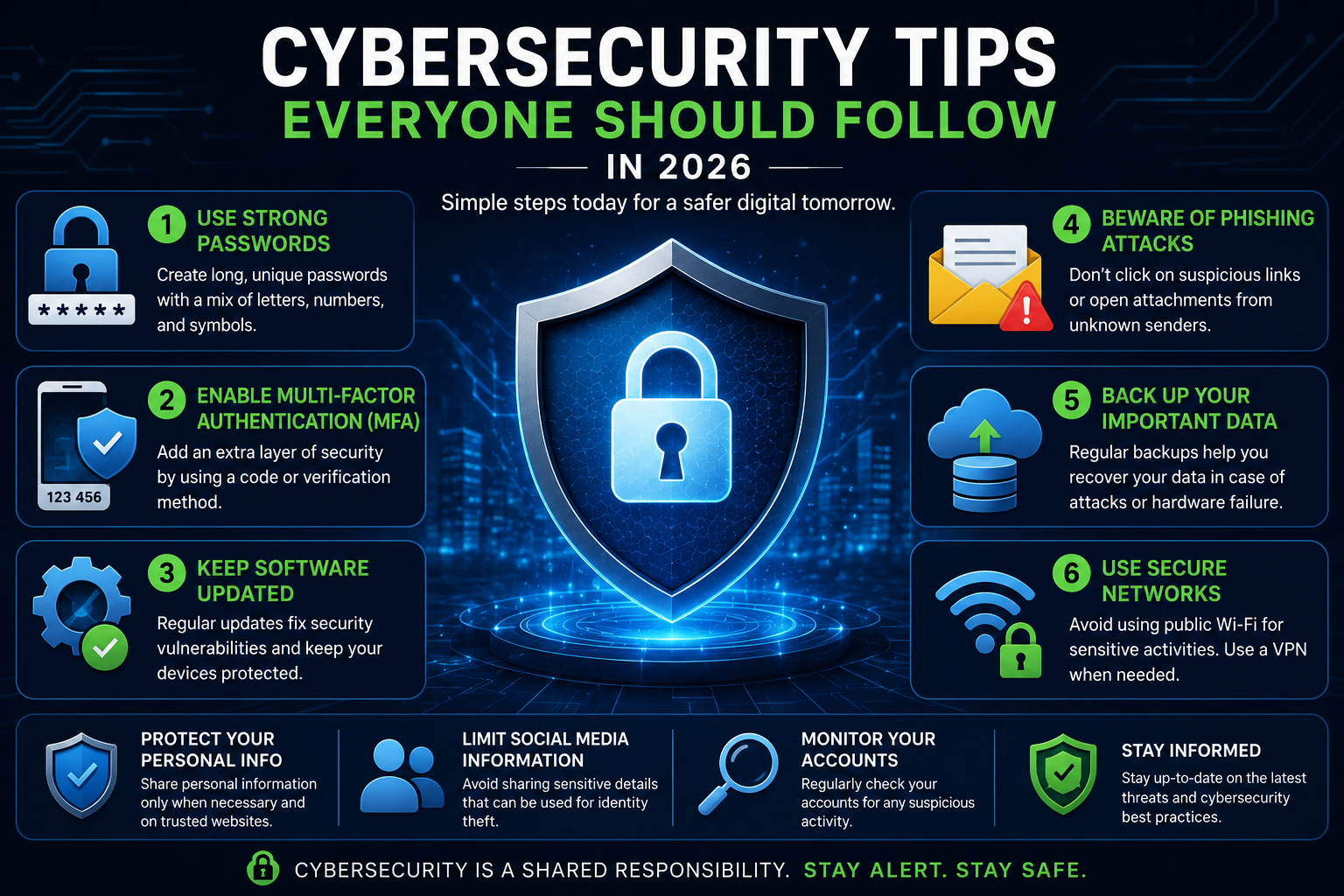
    One of the most important cybersecurity practices is using strong and unique passwords for every account. Weak passwords are easy targets for hackers. Consider using a password manager to generate and store secure passwords safely.

    Another essential step is enabling multi-factor authentication (MFA). This security feature adds an extra layer of protection by requiring users to verify their identity through a second method, such as a code sent to their phone or email.

    Keeping software and devices updated is equally important. Software updates often include security patches that fix vulnerabilities discovered by developers. Ignoring updates can leave systems exposed to cyberattacks.

    Users should also be cautious when opening emails, clicking links, or downloading attachments from unknown sources. Phishing scams remain one of the most common methods cybercriminals use to steal personal information and login credentials.

    Regularly backing up important files is another smart security habit. In the event of ransomware attacks, hardware failure, or accidental data loss, backups can help restore critical information quickly.

    Cybersecurity is an ongoing process rather than a one-time task. By following these simple but effective practices, individuals and businesses can significantly reduce their risk of cyber threats and enjoy a safer digital experience.

  • Cloud Computing Explained: Benefits for Businesses

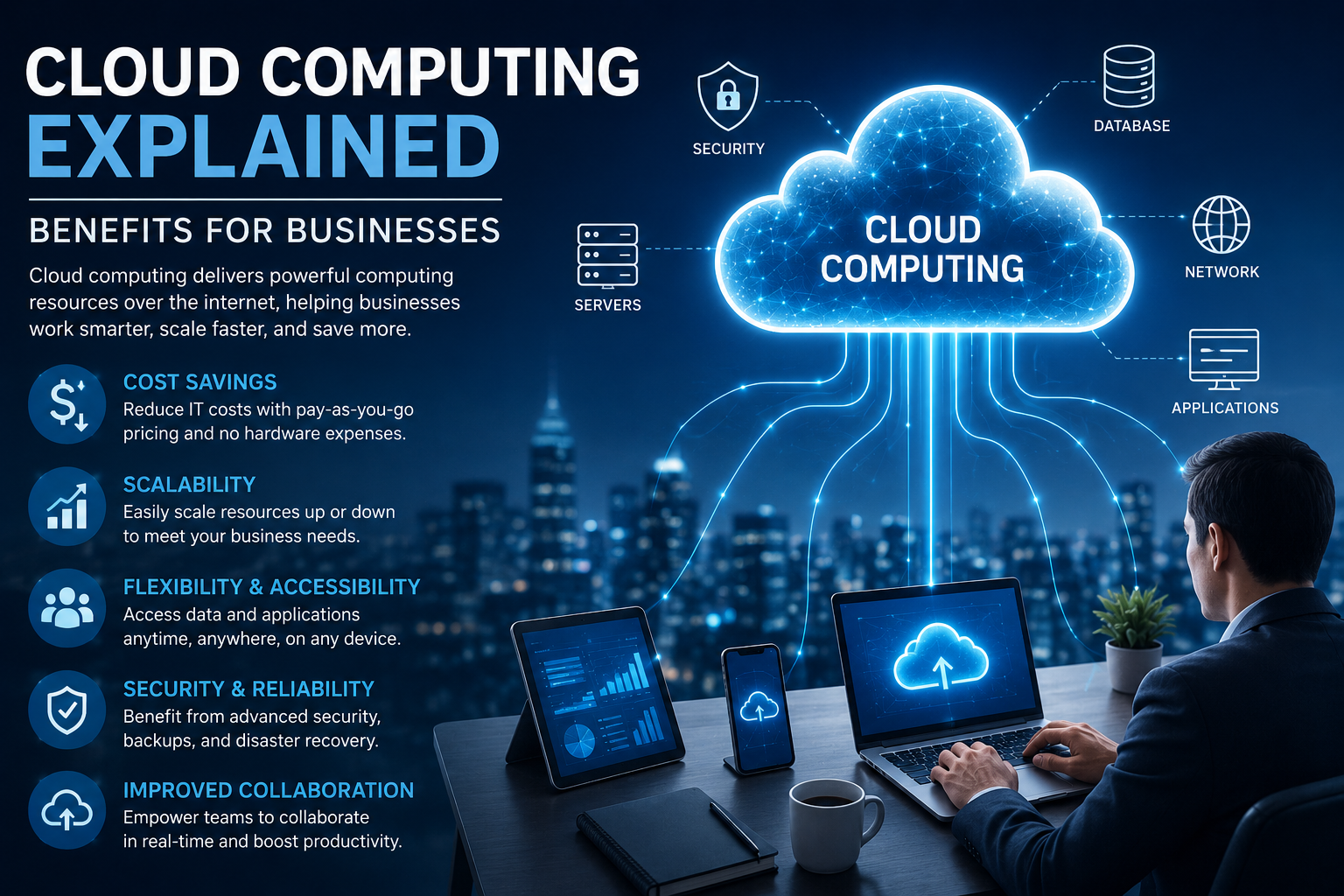
    Cloud Computing Explained: Benefits for Businesses

    Technology continues to transform the business world, and cloud computing has become one of the most important innovations of the digital age. Cloud computing refers to the delivery of computing services such as storage, databases, software, and networking over the internet. Instead of relying on physical servers and expensive hardware, businesses can access resources on demand from cloud service providers.

    One of the greatest benefits of cloud computing is cost efficiency. Traditional IT infrastructure requires significant investments in equipment, maintenance, and upgrades. Cloud solutions eliminate many of these expenses by offering flexible pricing models where businesses only pay for the resources they use.

    Another major advantage is scalability. As a business grows, its technology needs increase. Cloud computing allows organizations to quickly scale resources up or down without purchasing additional hardware. This flexibility helps companies adapt to changing market demands and business requirements.

    Cloud computing also supports remote work and collaboration. Employees can access files, applications, and business systems from virtually anywhere with an internet connection. Teams can collaborate in real time, improving communication and productivity across departments.

    Data security and disaster recovery are additional benefits. Most cloud providers implement advanced security measures, including encryption, regular backups, and threat monitoring. These features help protect sensitive business information and ensure business continuity in the event of unexpected disruptions.

    As digital transformation continues to accelerate, cloud computing remains a powerful tool for innovation and growth. Businesses that embrace cloud technology can improve efficiency, reduce operational costs, and gain a competitive advantage in today’s fast-paced marketplace.

  • How Artificial Intelligence Is Transforming Everyday Life

    How Artificial Intelligence Is Transforming Everyday Life

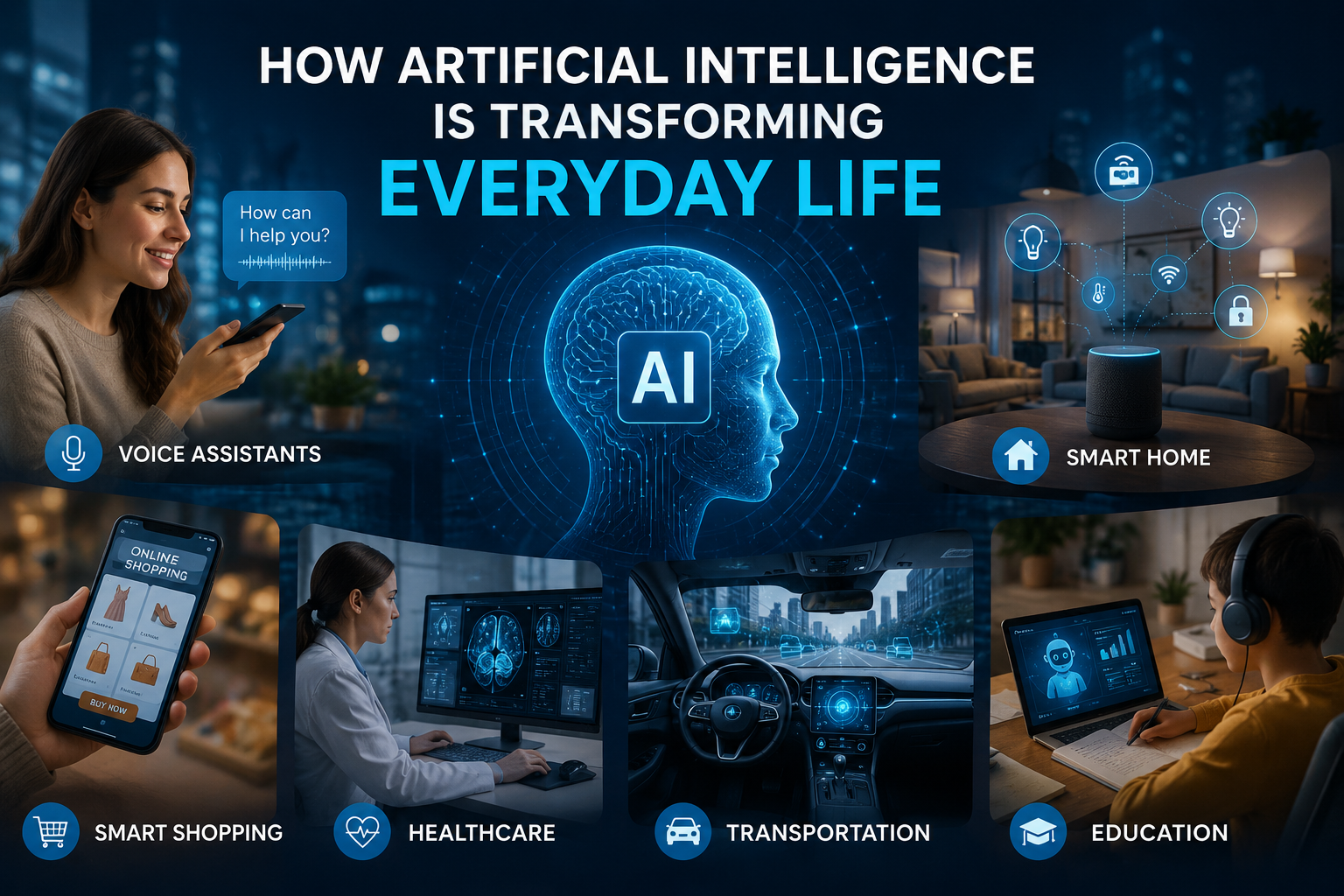
    Artificial Intelligence (AI) is no longer a futuristic concept found only in science fiction movies. Today, AI has become an integral part of daily life, helping people perform tasks more efficiently and improving experiences across various industries. From smartphones to online shopping, AI is changing how we interact with technology every day.

    One of the most common uses of AI is in personal digital assistants. Applications such as voice assistants can answer questions, set reminders, play music, and provide directions within seconds. These tools use advanced algorithms to understand user preferences and deliver personalized experiences.

    AI is also revolutionizing the way people shop online. E-commerce platforms analyze customer behavior, browsing history, and purchase patterns to recommend products that match individual interests. This not only improves the shopping experience but also helps businesses increase customer satisfaction and sales.

    In healthcare, AI is assisting medical professionals by analyzing patient data, detecting diseases earlier, and supporting more accurate diagnoses. These advancements help improve treatment outcomes and make healthcare services more efficient.

    Transportation is another area benefiting from AI technology. Navigation apps use real-time traffic data to suggest the fastest routes, while modern vehicles increasingly rely on AI-powered systems for safety features and driving assistance.

    Education has also embraced AI through personalized learning platforms that adapt to students’ needs and learning speeds. This allows learners to receive customized educational experiences and improve their understanding of complex subjects.

    As AI technology continues to evolve, its impact on everyday life will become even more significant. While challenges such as privacy and ethical concerns remain, AI offers countless opportunities to improve convenience, productivity, and innovation. Understanding and embracing these advancements can help individuals and businesses thrive in an increasingly digital world.

  • Top Technology Trends Every Business Should Watch in 2026

    Top Technology Trends Every Business Should Watch in 2026

    Top Technology Trends Every Business Should Watch in 2026

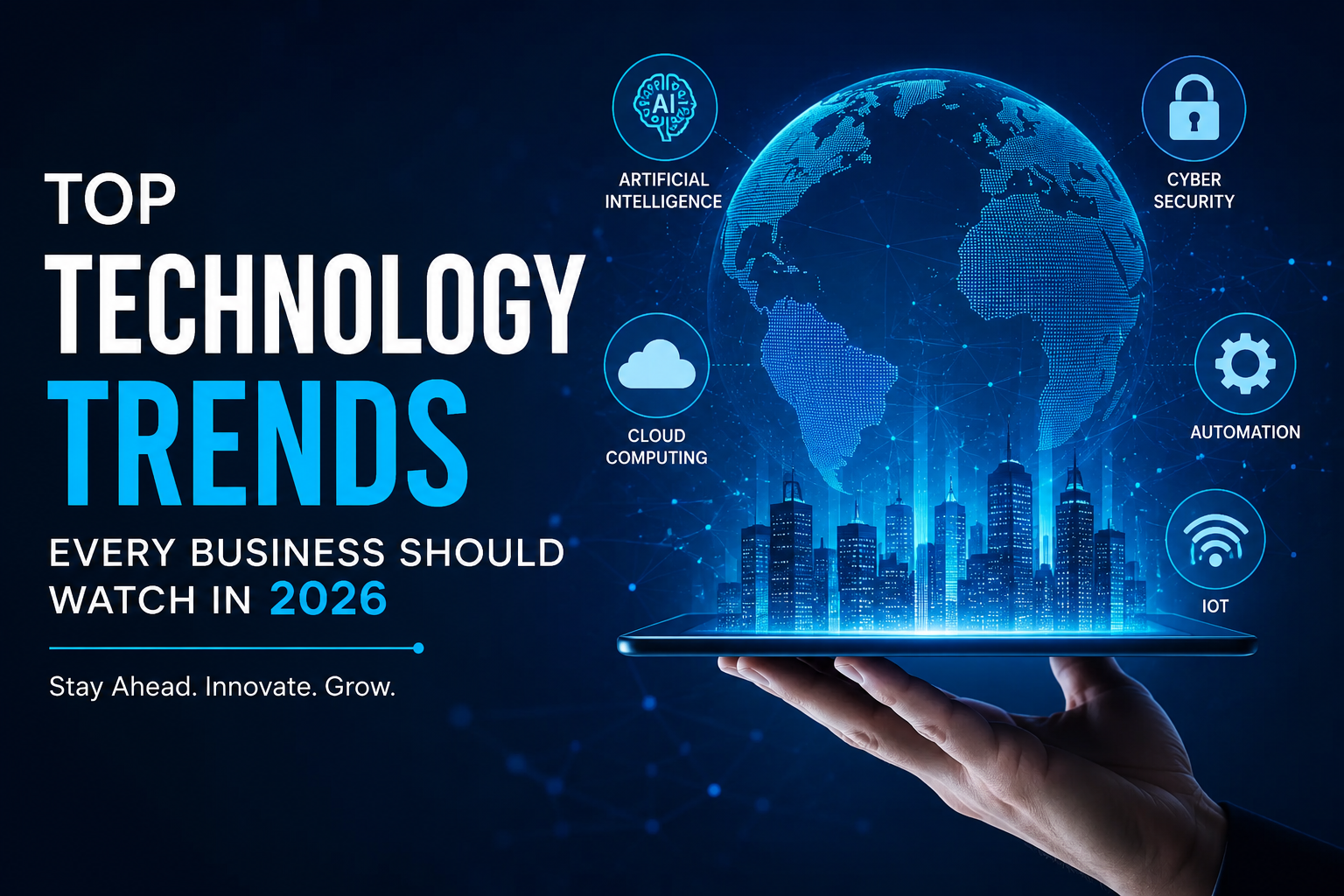
    Technology is evolving faster than ever, and businesses that embrace innovation are better positioned to stay competitive. From artificial intelligence to cloud computing, modern technology is transforming the way companies operate, communicate, and serve customers.

    Artificial intelligence (AI) continues to reshape industries by automating repetitive tasks, improving customer support through chatbots, and providing valuable insights from business data. Companies of all sizes are now using AI to boost productivity and reduce operational costs.

    Cloud computing has also become an essential part of business growth. It allows teams to work from anywhere, collaborate in real time, and securely store important files without investing in expensive hardware. This flexibility helps businesses scale efficiently while maintaining strong security.

    Cybersecurity remains a top priority as cyber threats become more sophisticated. Businesses should invest in secure passwords, multi-factor authentication, regular software updates, and employee awareness training to protect sensitive information from hackers.

    Another important trend is automation. Businesses are streamlining workflows by automating routine tasks such as invoicing, scheduling, customer communication, and data management. This saves time and allows employees to focus on higher-value work.

    The future belongs to businesses that are willing to adapt. By staying informed about emerging technologies and investing in the right digital solutions, organizations can improve efficiency, enhance customer experiences, and create new opportunities for growth. Technology is no longer just an advantage—it is a necessity for long-term success.